

MG QS Five-Star ANCAP Safety Rating: What Redlands Families Need to Know
Buyer Guides & Vehicle Reviews | MG | BartonsMG.com.au
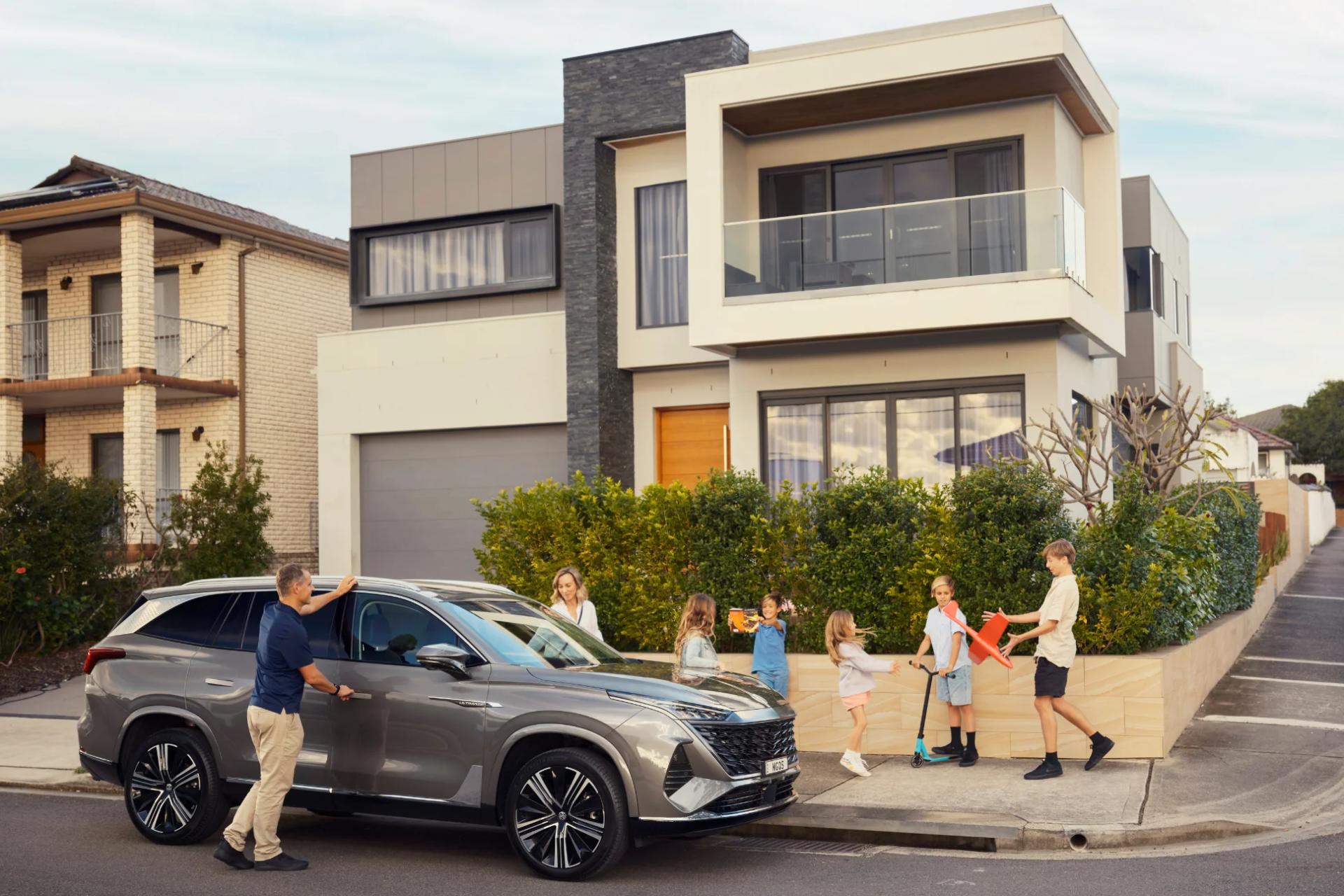
If you are in the market for a large family SUV and safety is a priority, the 2026 MG QS has just made your shortlist a lot more straightforward. Introduced to Australia in June 2025, the MG QS has achieved a five-star ANCAP safety rating (the highest possible result) under the demanding 2023-2025 assessment criteria, with scores that sit well above the five-star threshold across all four categories. The full MG QS range is available now at Bartons MG at 103 Redland Bay Road, Capalaba, your local MG dealer serving the Redlands Coast and South East Queensland.
The MG QS is a large seven-seat SUV built to compete at the pointy end of the family car market. A five-star result at this level carries real weight, and the detailed scores reveal a vehicle that has been engineered with genuine structural and technological commitment to occupant safety. Here is what the numbers mean for Redlands families considering the QS.
What is an ANCAP Safety Rating, and Why Does it Matter?
The Australasian New Car Assessment Program (ANCAP) is the independent body that crash-tests and rates new vehicles sold in Australia and New Zealand. Results are determined through rigorous, standardised testing at accredited facilities, completely independent of manufacturer claims. A five-star rating is the highest result achievable.
ANCAP assesses four key categories: Adult Occupant Protection, Child Occupant Protection, Vulnerable Road User Protection, and Safety Assist. The MG QS performed strongly across all four.
MG QS ANCAP Safety Rating: The Full Scorecard
The MG QS (IS31 series, built from April 2025) achieved the following results under 2023-2025 criteria:
| Category | Score | Rating |
|---|---|---|
| Adult Occupant Protection | 35.23 / 40 | 88% |
| Child Occupant Protection | 42.61 / 49 | 86% |
| Vulnerable Road User Protection | 48.05 / 63 | 76% |
| Safety Assist | 14.40 / 18 | 80% |
The rating applies to both variants sold in Australia: the MG QS Excite (2.0-litre petrol, FWD) and the MG QS Essence (2.0-litre petrol, AWD). It expires in December 2031.
Adult Occupant Protection: 88% (35.23 out of 40)
What Was Tested
The MG QS was assessed through a frontal offset test at 50 km/h, a full-width frontal test at 50 km/h, a side impact at 60 km/h, an oblique pole test at 32 km/h, far-side impact tests, and whiplash protection assessments.
What the Results Show
The MG QS scored 88 per cent for adult occupant protection. The passenger compartment remained stable in the frontal offset test. The driver received adequate protection for the chest and upper and lower legs, with good protection across all other body regions. The front passenger scored good protection across all critical body areas.
In the full-width frontal test, driver protection was good across all regions except the chest, which returned adequate. The rear passenger showed good protection for most regions; however, chest protection was rated weak in this particular test. This is a common challenge across vehicles in the large SUV segment under this specific test protocol.
The side impact result was exceptional: the MG QS scored the maximum available points, with good protection across all critical body regions. For families navigating the arterial roads around Capalaba, Alexandra Hills, and the Redland Bay corridor, this result is directly relevant to the kind of intersection collisions that happen in suburban driving. The oblique pole test returned near-maximum points, with adequate chest protection and good results across all other areas.
A standout result is the far-side impact score: the MG QS achieved the full 4.00 points out of 4.00, with the centre airbag providing good head protection for both front seat occupants. The MG QS also earned the full 4.00 points for rescue and extrication, including both door and window submergence testing, meaning both remain operational for the minimum required period if the vehicle enters water.
Child Occupant Protection: 86% (42.61 out of 49)
What Was Tested
Child occupant protection is assessed through dynamic crash testing using six-year-old and ten-year-old child dummies in frontal offset and side impact scenarios, as well as a practical assessment of how standard Australian and New Zealand child restraints can be installed.
What the Results Show
The MG QS scored 86 per cent in child occupant protection, a strong result for a large seven-seat SUV. In the frontal offset test, neck protection for both the six-year and ten-year dummies was adequate, with good protection across all other body regions. In the side impact, both dummies showed good protection across all body areas, with maximum points scored.
The MG QS is fitted with ISOFix lower anchorages on both second-row outboard seats and top tether anchorages across all second-row positions. All assessed child restraint types, from rear-facing capsules through to boosters for children up to ten years, can be installed in second-row positions without issue, earning full points in the restraint installation assessment.
One important safety note for Redlands families: top tether anchorages are not available in the optional third row. ANCAP advises that child restraints should not be installed in the third row of the MG QS. If seating children in the third row is a requirement for your family, speak with our team at Bartons MG Capalaba before purchase so we can help you find the right solution.
The MG QS does not offer a child presence detection (CPD) system, which is reflected in the on-board safety features score.
Vulnerable Road User Protection: 76% (48.05 out of 63)
What Was Tested
Vulnerable road user (VRU) protection covers the physical construction of the vehicle's bonnet and windscreen and the performance of the AEB system in detecting and reacting to pedestrians, cyclists, and motorcyclists.
Physical Impact Results
The MG QS bonnet and windscreen provided good to marginal head protection across most of the surface, with weak and poor results at the stiff windscreen pillars, the base of the windscreen, and the front edge of the bonnet. Femur protection was excellent, scoring near maximum points. Pelvis and lower leg protection was mixed.
Autonomous Emergency Braking: Pedestrians, Cyclists, and Motorcyclists
The AEB system for vulnerable road users operates from 5 km/h to 85 km/h. Whether you are navigating the school zones along Redland Bay Road, sharing the road with cyclists on the Redlands Coast trail network, or travelling through the Capalaba retail precinct during busy periods, the system was tested across a comprehensive range of real-world scenarios.
Pedestrian AEB performance was rated good in forward scenarios, with collisions avoided or mitigated in most tests including turning scenarios, both day and night. In reverse (AEB Backover), performance was rated marginal, providing some mitigation but less reliably at lower speeds. This is worth noting for families with young children around driveways and shopping centre car parks.
Cyclist AEB performance was rated good, with collisions avoided or mitigated at all test speeds including turning scenarios. The cyclist dooring warning alerts the driver when a cyclist is approaching from behind before a door is opened, which is useful through the Capalaba Central and Park Ridge Road shopping precincts.
Motorcyclist AEB performance was rated good, including in turning and overtaking scenarios, earning full points. The lane support system also returned good performance in motorcyclist testing.
Safety Assist: 80% (14.40 out of 18)
What Was Tested
Safety Assist evaluates the active safety technology suite: AEB for car-to-car scenarios, lane support, speed assistance, seat belt reminders, and driver monitoring.
Car-to-Car AEB: Good Performance Across the Board
The MG QS AEB system operates from 8 km/h to 150 km/h, covering urban speeds through to motorway driving. Testing returned good performance across all standard car-to-car scenarios. AEB Junction and Crossing performance was good, directly relevant to the intersection-heavy road network through the Redlands. AEB Head-On earned the full available point.
Lane Support System
The lane support system operates from 60 to 130 km/h, covering lane keep assist (LKA) and emergency lane keeping (ELK). Both were rated good in testing, including in the critical emergency lane keeping scenarios, relevant for motorway driving on the Gateway and Pacific Motorway routes used regularly by Redlands commuters.
Speed Assistance and Driver Monitoring
The MG QS includes an intelligent speed assistance system with speed sign recognition, an intelligent speed limiter, and intelligent adaptive cruise control as standard.
A direct driver monitoring system (DMS) is fitted as standard, detecting both drowsiness and distraction. This is a direct system rather than the indirect method found on many competitors, offering more reliable detection during longer drives.
Seat belt reminders are fitted for all seating positions, with occupant detection available for the second row. Occupant detection is not available for the optional third row.
MG QS Safety Features: What Comes Standard
The MG QS arrives with a comprehensive safety technology list as standard across both variants:
- Dual frontal airbags (driver and front passenger)
- Side chest-protecting airbags (front, second row, and third row seats)
- Side head-protecting curtain airbags (front, second row, and third row)
- Centre airbag
- Knee airbags (driver and front passenger)
- Autonomous emergency braking: car-to-car, pedestrian (forward and reverse), cyclist, and motorcyclist
- AEB Junction, Crossing, and Head-On
- Lane keep assist (LKA) and emergency lane keeping (ELK)
- Lane departure warning (LDW)
- Forward collision warning (FCW)
- Blind spot monitoring (BSM)
- Speed sign recognition and intelligent speed limiter
- Intelligent adaptive cruise control
- Direct driver monitoring system (drowsiness and distraction detection)
- Cyclist dooring detection and alert
- Seat belt reminders for all seating positions
- Multi-collision braking system
- Automatic emergency call (eCall)
- ISOFix anchorages (second-row outboard seats) and top tether anchorages (second row only)
- Rescue sheet for emergency responders
Which MG QS Variants Does the Five-Star Rating Cover?
The five-star ANCAP rating applies to both MG QS variants sold in Australia, built from April 2025 onwards:
- MG QS Excite (2.0-litre petrol, FWD)
- MG QS Essence (2.0-litre petrol, AWD)
Test Drive the Five-Star MG QS at Bartons MG, Capalaba
At Bartons MG, we believe Redlands families deserve clear, factual information about the safety of every vehicle they consider, not just the spec sheet talking points. The MG QS's five-star ANCAP result is independently verified and places it among the safest large SUVs available in Australia today.
Whether you are drawn to the Excite's value proposition or the Essence's AWD capability, the MG QS at BartonsMG.com.au delivers a five-star rated, seven-seat SUV with a safety technology list that competes well above its price point.
Come in and see us at 103 Redland Bay Road, Capalaba, take the MG QS for a test drive, and let our team help you find the right variant for your family.
Call us on (07) 3245 2200 or book a test drive at BartonsMG.com.au.
Search
All safety scores, test results, and feature listings are drawn directly from the official ANCAP assessment report for the MG QS (IS31, June 2025 onwards), published November 2025. Rating applies to all Australian-market variants built from April 2025 onwards. Source: ancap.com.au.
